How Aluminum Foundry drives manufacturing development
Wiki Article
Discover the Various Types and Uses of Aluminum Foundry in Industrial Processes
Aluminum factories play a crucial duty in numerous commercial fields. They employ various casting approaches, each tailored to fulfill certain making requirements. From sand spreading's convenience to the effectiveness of die casting, the option of a method can greatly influence production end results. The applications of Aluminum castings extend throughout multiple sectors, highlighting their significance. Recognizing these processes and their effects can expose more regarding exactly how Aluminum forms modern production. What lies in advance in this progressing field?Comprehending Aluminum Foundry Processes
Aluminum Foundry procedures are essential in the manufacturing industry, transforming raw Aluminum right into usable elements through a series of distinct actions. The procedure commonly begins with melting Aluminum in a furnace, where accurate temperature level control is essential to achieve the preferred properties in the last product. Once melted, the Aluminum is put right into mold and mildews, which can be developed for certain sizes and shapes, guaranteeing efficiency in production.After solidifying and cooling, the cast elements go through completing processes such as machining, cutting, and surface treatment, boosting their performance and appearance. Quality control measures are implemented throughout, guaranteeing that each item satisfies sector criteria and requirements. The convenience of Aluminum allows for its usage in a wide variety of applications, from vehicle parts to aerospace parts. Generally, Aluminum Foundry procedures play a significant function in supplying high-grade, light-weight products that contribute to various commercial innovations.
Sorts Of Aluminum Foundries
Aluminum factories can be categorized into several kinds, each offering specific producing requirements. Sand spreading shops, die casting shops, and irreversible mold and mildew factories stand for the key methods used in the sector. Comprehending the differences amongst these types is necessary for picking the ideal process for various applications.Sand Spreading Foundries
Sand spreading foundries represent an essential approach in the Aluminum casting procedure, renowned for their convenience and cost-effectiveness. This method entails producing a mold and mildew from sand, which can be quickly formed and recycled, permitting the manufacturing of complex geometries. The procedure begins with the development of a pattern, usually made from a sturdy material, which is after that surrounded by a combination of sand and binder. As soon as the mold and mildew is established, molten Aluminum is gathered and enabled to cool down, strengthening right into the desired form. Sand spreading is particularly beneficial for reduced to tool manufacturing quantities, providing high customization and versatility. The process is commonly utilized in vehicle, aerospace, and industrial applications, making it a keystone of Aluminum Foundry operations.Die Spreading Foundries
Die casting factories represent a remarkable development in the Aluminum spreading sector, identified by their ability to create high quantities of precision elements. This approach involves requiring liquified Aluminum right into a mold and mildew tooth cavity under high stress, which permits elaborate designs and tight resistances. The process is suitable for manufacturing elements in various industries, consisting of vehicle, aerospace, and electronic devices, where harmony and information are essential. Pass away casting factories use sophisticated techniques such as hot-chamber and cold-chamber processes, each offering unique benefits depending on the certain application. On top of that, the rapid production cycles in die casting significantly boost efficiency, making it a preferred option for automation while preserving superb surface area coatings and mechanical buildings in the last products.
Irreversible Mold And Mildew Foundries
An additional substantial kind of Aluminum Foundry is the irreversible mold Foundry, which makes use of metal mold and mildews to cast Aluminum elements. This approach enables for high accuracy and repeatability in production, making it perfect for generating intricate forms and thorough layouts. The molds are normally made from steel or iron, giving sturdiness and the ability to endure the casting procedure's heats. Long-term mold and mildew shops are specifically reliable for tool to high manufacturing runs, as they use a balance in between cost performance and product quality. In addition, they supply much better mechanical residential or commercial properties compared to sand-cast parts because of the quick air conditioning of the metal in a solid mold and mildew, causing a finer grain structure. This procedure is commonly used in automobile and aerospace applications.Applications of Aluminum Castings
Aluminum castings offer a necessary duty across numerous industries as a result of their light-weight, strength, and deterioration resistance. In the auto market, Aluminum castings are generally made use of for engine blocks, transmission cases, and wheels, contributing to sustain performance and performance. The aerospace sector utilizes Aluminum spreadings for structural elements, guaranteeing decreased weight without endangering safety.In the construction market, Aluminum castings are utilized for home window structures, doors, and architectural supports, enhancing sturdiness and visual appeal. Additionally, the electronics industry gain from Aluminum castings in the manufacturing of housings and warmth sinks, giving efficient thermal administration.
The medical field also leverages Aluminum castings for making devices and gadgets, maximizing their biocompatibility. Generally, the convenience of Aluminum spreadings allows for innovative applications across different address domain names, attesting their relevance in contemporary commercial procedures.
Advantages of Using Aluminum in Foundry Manufacturing
The advantages of Aluminum in Foundry production are countless and add significantly to its extensive use across numerous sectors. One considerable advantage is its light-weight nature, which minimizes transport expenses and boosts power effectiveness in applications. In addition, Aluminum displays outstanding deterioration resistance, causing sturdy items that need minimal maintenance. Its remarkable thermal and electric conductivity additionally makes it an optimal option for components in automotive and electric sectors.Aluminum's convenience enables a series of alloy formulas, making it possible for makers to tailor buildings such as toughness and pliability for specific applications. The material's desirable spreading attributes help with intricate designs and great details, resulting in premium ended up items. Aluminum can be recycled repetitively without shedding its stability, advertising sustainability in making techniques. Generally, these advantages position Aluminum as a recommended product in Foundry processes, driving advancement and efficiency across numerous industries.
Cutting-edge Strategies in Aluminum Foundry
As industries advance and demand for premium Aluminum parts increases, innovative strategies in Aluminum Foundry procedures have actually arised to improve performance and precision. Advanced computer-aided design (CAD) systems allow accurate modeling of parts, decreasing product waste and boosting accuracy (Aluminum Foundry). Furthermore, the fostering of 3D printing technology permits for quick prototyping and the production of complicated geometries that standard techniques struggle to achieveMoreover, the combination of automation and robotics streamlines assembly line, reducing human error and raising throughput. Methods such as vacuum casting and pass away casting further enhance the high quality of Aluminum products by making certain harmony and strength. Making use of real-time monitoring systems during casting processes enables for prompt changes, keeping perfect conditions and reducing defects. These innovative approaches not only enhance performance however likewise add to the overall quality and integrity of Aluminum elements in different commercial applications.
Ecological Considerations in Aluminum Casting
Environmental factors to consider in Aluminum casting are progressively vital as markets seek to reduce their ecological impact. Efficient waste monitoring approaches and exhaust decrease methods play an important duty in achieving sustainable methods within foundries. Addressing these worries not only benefits the atmosphere however additionally boosts the sector's lasting feasibility.Waste Management Strategies
Sustainability in Aluminum casting pivots on effective waste monitoring techniques that decrease environmental influence. Shops produce numerous types of waste, consisting of scraps, dross, and invested materials, which require methodical handling. Executing reusing programs is vital, as redeeming Aluminum scrap can considerably reduce raw material intake and energy use. In addition, embracing techniques such as closed-loop systems can aid in reusing water and chemicals, thus decreasing waste discharge. In addition, educating workers concerning waste partition can boost reusing initiatives and advertise a culture of sustainability within the workplace. The integration of modern waste administration technologies, such as effective sorting and processing devices, additional adds to decreasing landfill contributions. Inevitably, robust waste management approaches are crucial for achieving ecological conformity and cultivating lasting Aluminum spreading operations.Discharge Reduction Techniques
Effective discharge reduction techniques are essential for minimizing the environmental effect of Aluminum spreading procedures (Aluminum Foundry). Different techniques have been implemented to attain this objective, consisting of making use of innovative filtering systems that capture unsafe particulates and unpredictable natural substances (VOCs) prior to they go into the atmosphere. Furthermore, maximizing heating system operations can considerably minimize energy usage and reduced greenhouse gas emissions. The fostering of cleaner technologies, such as electric melting heating systems, further boosts sustainability. Furthermore, applying closed-loop cooling systems reduces water usage and prevents thermal pollution. Constant surveillance of discharges guarantees compliance with environmental guidelines and aids recognize areas for improvement. By incorporating these strategies, Aluminum factories can contribute to a more sustainable commercial procedure while satisfying environmental requirementsThe Future of Aluminum Foundry in Market
As sectors progress, the future of Aluminum Foundry is poised for significant improvement driven by improvements in innovation click here now and transforming market needs. Advancements such as automated spreading processes, artificial intelligence, and maker learning are improving performance and accuracy in Aluminum production. These innovations not just streamline procedures but also decrease waste and energy usage, lining up with the market's focus on sustainability.Moreover, the combination of additive manufacturing techniques is reinventing style possibilities, enabling complex geometries that were previously unachievable. As the vehicle and aerospace markets increasingly demand lightweight materials, Aluminum shops are adapting to fulfill these specifications with tailored alloys and boosted buildings.
In enhancement, the international promote recycling and round economic situation techniques is guiding foundries in the direction of utilizing recycled Aluminum, thereby lowering ecological effect. Generally, the Aluminum Foundry industry is established to welcome a future characterized by flexibility, development, and sustainability to fulfill progressing industrial needs.
Often Asked Concerns
What Security Measures Are Necessary in Aluminum Foundries?
In Aluminum shops, crucial precaution consist of using individual safety devices, proper air flow systems, normal devices maintenance, training for employees on hazardous materials, and adherence to safety and security protocols to prevent crashes and injuries.How Do Aluminum Foundries Manage Waste Disposal?
Aluminum shops take care of waste disposal via organized recycling programs, contaminated materials procedures, and adherence to ecological regulations. They prioritize lessening waste generation, guaranteeing appropriate segregation, and collaborating with certified disposal facilities to mitigate environmental impact properly.What Are the Expenses Associated With Aluminum Foundry Solutions?
The expenses related to Aluminum Foundry services vary significantly, affected by variables such as product prices, labor costs, devices maintenance, and manufacturing volume. Efficient management of these elements is necessary for preserving affordable rates and success.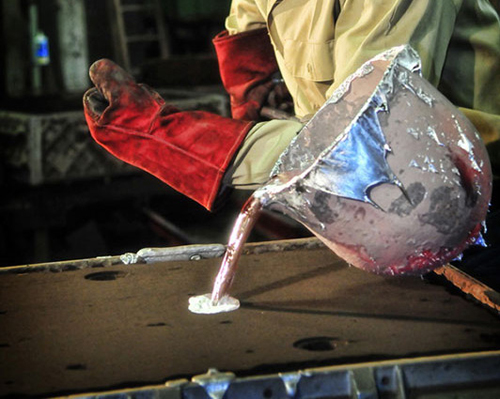
Can Aluminum Foundry Processes Be Automated?
Aluminum Foundry procedures can certainly be automated to improve effectiveness and accuracy. Aluminum Foundry. Automation decreases labor prices, reduces human mistake, and enables regular production quality, making it a progressively preferred choice in contemporary manufacturing settingsJust How Does Temperature Level Affect Aluminum Spreading Top Quality?
Temperature considerably affects Aluminum spreading quality; raised temperature levels can boost fluidness yet may bring about defects like porosity. Conversely, lower temperature levels could decrease issues yet can result in inadequate mold dental filling and poor surface finish.Aluminum Foundry processes are vital in the manufacturing market, transforming raw Aluminum right into functional parts through a collection of distinct actions. Sand casting shops represent an essential technique in the Aluminum casting procedure, renowned for their versatility and cost-effectiveness. Pass away casting foundries represent a notable advancement in the Aluminum casting industry, identified by their capability to generate high volumes of accuracy elements. One more significant kind of Aluminum Foundry is the permanent mold and mildew Foundry, which uses metal mold and mildews to cast Aluminum components. my company As markets develop and require for high-quality Aluminum elements increases, cutting-edge techniques in Aluminum Foundry processes have emerged to enhance effectiveness and accuracy.
Report this wiki page